
· 8 min read · Spearos Pacífico
Banderas Bay can be fished all year. What changes is which species are around, how far out they are, and which method suits them — and that difference is what decides whether a January trip or a September trip is the right one for you.
Everything below comes from the seasonal calendar we keep on the site, which reflects what our guides see year to year. Runs shift, water temperature moves earlier or later, and nothing here is a promise.
January to March: Cool, Clear, Inshore
Cooler water concentrates a lot of activity closer to home. Roosterfish are at their prime, schooling between Punta Mita and the Marietas Islands. Grouper and snapper hold on inshore reefs. African pompano fish well on the bottom with live sardines. Mahi-mahi remain catchable in the bays or on the troll through about mid-February, and tuna sit in offshore schools thirty to forty miles out — a live-bait sportfishing proposition rather than a spearfishing one.
This is a strong window for inshore fishing and reef spearfishing, and it overlaps with humpback whale season, which runs December to April.
April to June: The Transition
Water begins to warm and the picture changes. Snapper are at their prime in cooler, murkier water early in this window, and grouper spread across many inshore reefs and depths. African pompano continue through early June. Octopus season starts in May or early June. Tuna, meanwhile, can move roughly a hundred miles out — outside daily-trip range — and wahoo and mahi-mahi go quiet.
It is a good period for reef work and inshore days, and a poor one to build a trip around pelagics.
July to September: Blue Water Opens Up
Warm, clear water pushes reef fish deeper and further offshore, and the offshore hunting comes alive. Small to medium tuna hold around structure roughly twenty miles out — spearfishing or rod and reel — while mahi-mahi are at their prime around the bays and debris lines holding sardines. Billfish are prime offshore on lures and live bait, and smaller wahoo appear near the offshore pinnacle as their season begins. Octopus are prime on the shallow local reef.
This is the classic window for blue-water spearfishing and offshore fishing.
October to December: The Big-Fish Window
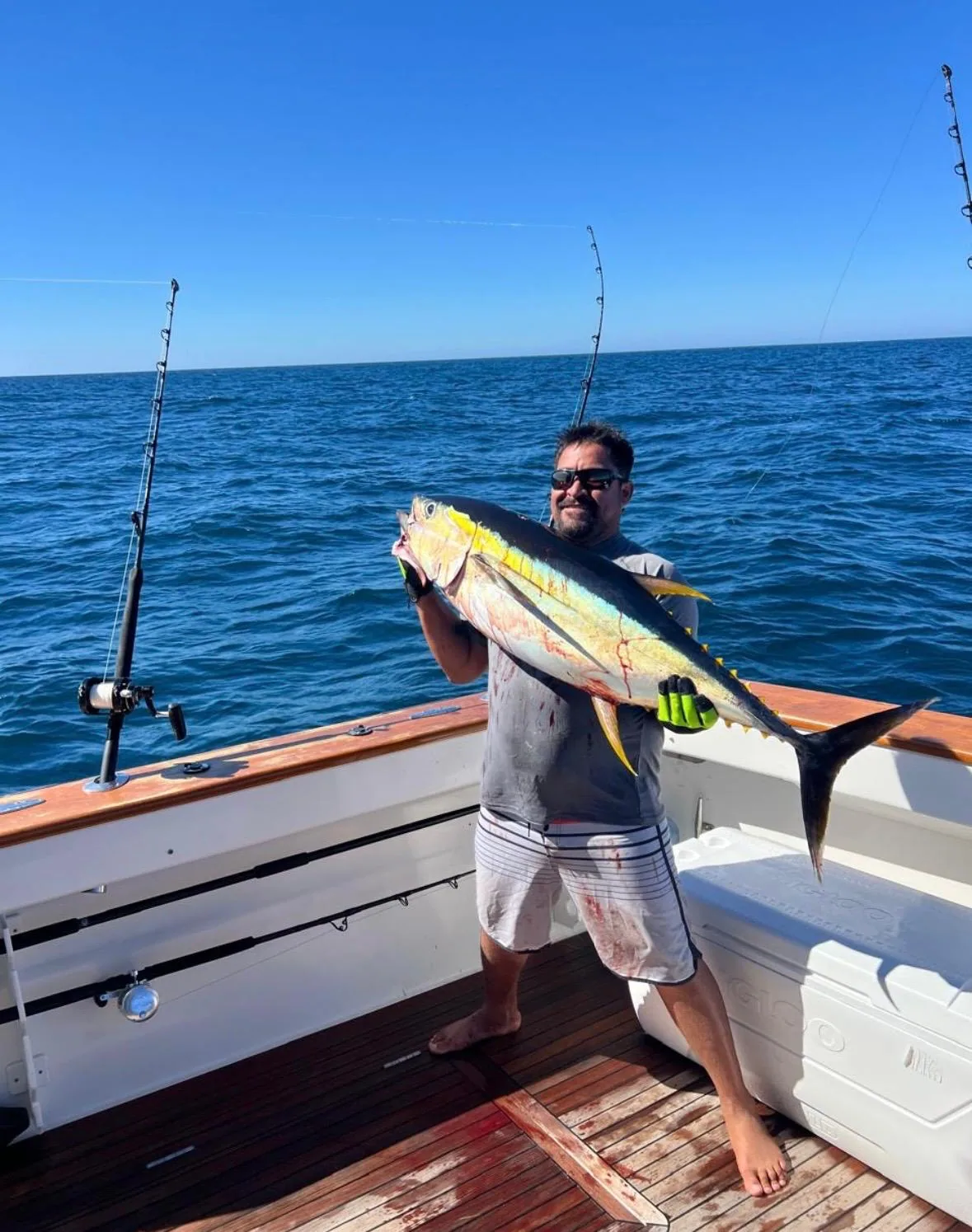
Cooling water brings size. Our calendar calls the last quarter the prime period for very large tuna, sixteen to thirty miles out, and cooling water brings larger wahoo — spearfishing or high-speed trolling. Snapper numbers grow inshore on local reefs and in larger offshore schools, and mahi-mahi show as larger fish both offshore and in the inshore bays. Billfish continue, though stronger winds can slow things down.
If your priority is a trophy fish rather than variety, this is the window most guides point to.
| Jan–Mar | Jul–Sep | |
|---|---|---|
| Tuna | Offshore schools 30–40 miles out. Live-bait sportfishing recommended. | Small to medium fish around structure roughly 20 miles out. Spearfishing or rod and reel. |
| Mahi-Mahi | In the bays or trolling through mid-February. | Prime around bays and debris lines holding sardines. |
| Wahoo | Strongest period when temperatures suit, about 16 miles out. | Smaller fish near the offshore pinnacle as the season begins. |
| Snapper | Small to medium Cubera, Colorado and Pacific Red Snapper inshore and offshore. | Warm clear water pushes fish deeper and further offshore. |
| Grouper | Early season, smaller Leopard and Broomtail. | Warmer water pushes fish deeper and offshore. |
| Octopus | Off-season. | Prime on the shallow local reef. |
| African Pompano | Prime bottom fishing with live sardines. | Off-season. |
| Roosterfish | Prime, with fish schooling between Punta Mita and the Marietas Islands. | Minor activity and smaller fish. |
| Billfish (Black & Blue Marlin, Sailfish) | Minor activity, with some Blue Marlin offshore. | Prime offshore on lures and live bait. |
Matching a Trip to a Season
Reef spearfishing
- Strong most of the year on productive local structure
- Snapper and grouper best in the cooler, murkier months
- Warm clear water can push reef fish deeper
Blue water spearfishing
- Best when pelagics are within range of a day trip
- Tuna around structure roughly 20 miles out mid-year
- Prime for very large tuna in the last quarter
Inshore fishing
- Roosterfish prime January to March
- Snapper, jacks and sailfish through much of the year
- Works for families and mixed-ability groups
Offshore fishing
- Billfish prime July to September
- Large tuna and wahoo as the water cools
- Half-day and full-day options
The Honest Caveat
A calendar tells you what is likely, not what will happen. Currents, water temperature, bait movement and wind all shift the picture, sometimes within a week. The most useful thing you can do is send us your dates and let us tell you what the water is actually doing when you arrive.
When is the best time to fish in Banderas Bay?
It depends what you want. October to December is the window for very large tuna and wahoo; July to September for billfish and blue-water hunting; January to March for roosterfish and inshore reef work.
When is yellowfin tuna season?
Our calendar notes small to medium fish around structure roughly twenty miles out from July to September, and the prime period for very large fish sixteen to thirty miles out from October to December.
Is there a bad time to visit?
No dead season, but April to June is a transition period when tuna can move well beyond daily-trip range and wahoo and mahi-mahi go quiet. Reef and inshore days still fish well.
When can I see humpback whales?
December through April, when humpbacks migrate into Banderas Bay to breed and calve. Our whale safari runs in that window.
Can you guarantee we'll catch a target species?
No. Seasonal guidance describes tendencies. Conditions vary, runs shift year to year, and catch is never guaranteed.