
· 10 min read · Spearos Pacífico
Spearfishing equipment is unusually easy to get wrong, because the expensive item is rarely the one that limits you. A carbon fin will not fix a mask that floods, and a bigger gun will not help if you cannot get into position quietly.
So here is the order that actually matters — what each piece does, how to choose between the versions we stock, and what can wait.
1. Mask — Fit First, Volume Second
A spearfishing mask should be low volume, meaning the air space between the lens and your face is small. Less air means less to equalise on the way down, which makes descending easier and less distracting.
The second requirement is a seal that suits your face. This is personal and it is the reason a $90 mask that fits beats a $200 mask that doesn't.
- SpearPro Venom — described as a very popular low volume mask that will fit most faces. A sensible default if you can't try masks on.
- SpearPro X-Factor — low volume with a wide field of view, hypoallergenic black silicone skirt, clear lenses and quick-adjust buckles that work with gloves on.
- Riffe Naida and Riffe Mantis 5 — clear-lens dive masks for divers who prefer the Riffe skirt shape.
A black skirt cuts glare and reflections; a clear lens keeps light in. Both are preference, not performance.
2. Fins — Long Blades, Comfortable Pockets
Freediving fins are long because they move a lot of water slowly. Slow is the point: quiet, efficient movement is what lets you approach fish and return to the surface without burning oxygen.
The blade decides efficiency; the foot pocket decides whether you last four hours.
- SpearPro Genesis — modular fibreglass-and-polypropylene blades with a reactive centre insert, a 20-degree blade angle that suits surface swimming, and thermoplastic rubber foot pockets. Universal pocket channelling accepts most brands of blades, so they upgrade later.
- SpearPro Genesis Footpockets — the pockets on their own, for divers who already have blades. Assembly kit sold separately.
- DiveR Blue Scale Composite — composite blades built around kinetic energy distribution, reallocating energy to reduce diver effort.
- DiveR Paua Carbon Fiber — carbon weave developed over 25 years of work with companies such as F1 Racing, built for efficient energy return.
- DiveR Innegra V2 — DiveR's most kinetic and durable weave, for divers spending serious time in blue water.
Plastic or composite blades are the right first purchase for most people: they survive rocks, boat decks and travel, and modular systems let you move to carbon later without replacing the pockets.
3. Speargun — Match the Length to the Water
Gun length is about visibility and range, not ambition. Short guns are quick to aim and easy to handle in structure. Long guns reach further in open, clear water but are slower to swing and harder to load.
- Reef and structure: shorter guns. An enclosed-track 100 keeps the shaft tracking tightly in close quarters.
- Open reef and mixed conditions: a 120 open track is the common all-rounder length.
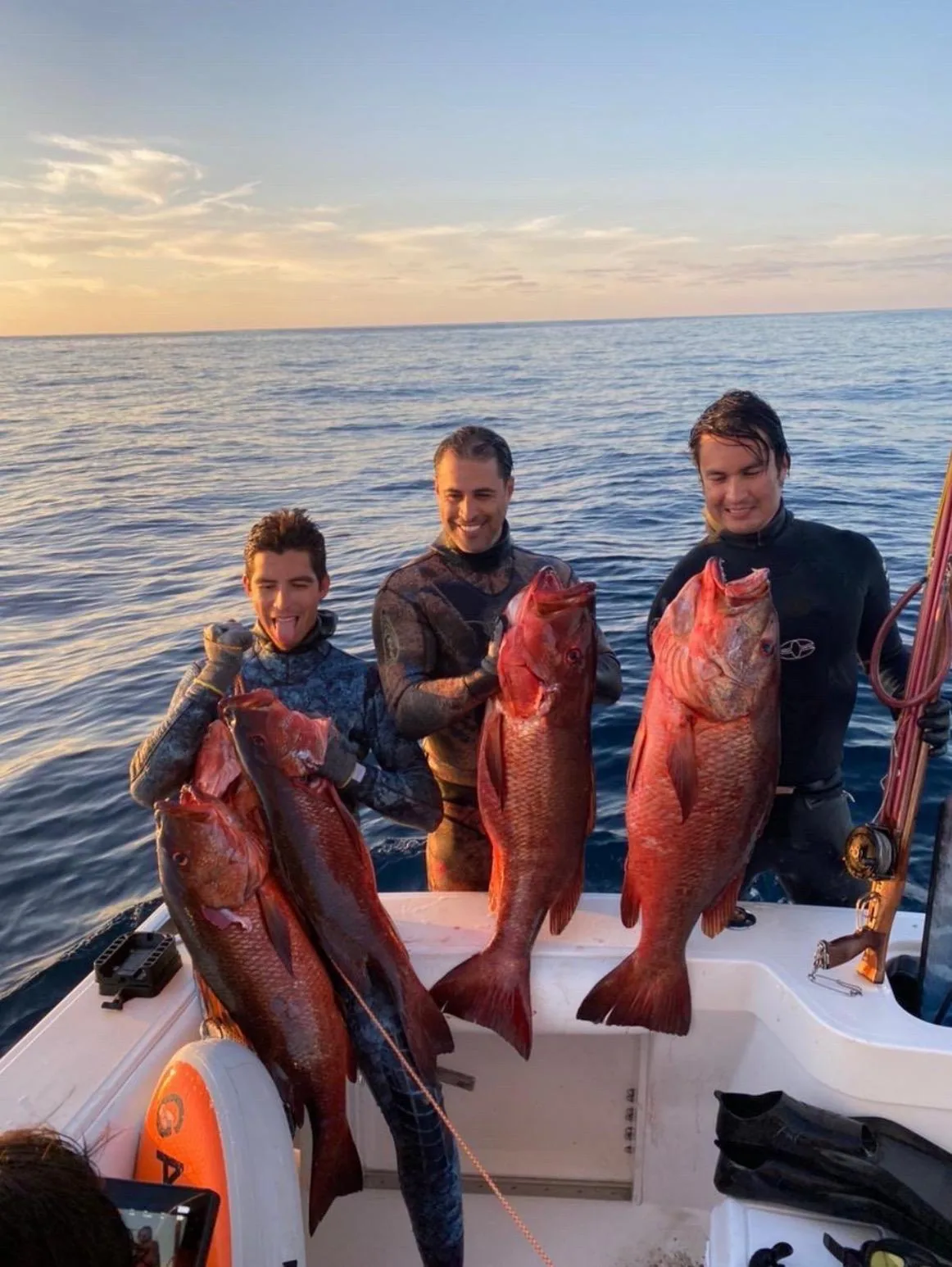
- Blue water: longer, heavier setups, run with a float line and float rather than a reel — a big pelagic will take line.
- Pole spears: the Mamba Roller composite kit (9 ft, 3-piece) is a genuinely enjoyable way to hunt shallow reef and travels well.
Whatever you buy, keep it in your hands. Loading, unloading and carrying a speargun safely is a learned skill, and the first outing with a new gun should not also be your first outing with a new technique.
4. Float, Float Line and Flag — Not Optional
A float does three jobs: it tells boats where you are, it gives a speared fish something to fight instead of you, and it carries your catch and spare gear.
- Reef days: a bungee or vinyl float line assembly (50 ft is a common length) and a hard float.
- Bigger fish: a pressurised float such as the SpearPro Yellowtail (30PSI, 30L) or Wahoo (30PSI, 40L) resists compression as it is pulled down.
- Reels: a horizontal reel keeps line off your float for reef work, but for pelagics most hunters go back to a float line.
Whatever your local rules require, fly a flag. Boat traffic in a busy bay is the risk you cannot see from underwater.
5. Belt, Knife and the Small Things That Matter
A weight belt should sit on your hips and come off in one motion. Both belts we stock — the SpearPro Weight Belt and the Robust Belt — use a safety buckle for that reason. Weight keepers in Delrin or stainless stop weights sliding as you move.
A knife is safety equipment before it is a tool: line, net and your own float line are all things you may need to cut. The Torpedo 9cm stainless knife is a compact everyday option; the double-serrated Pike is a bigger blade; the Banshee 9" stiff fillet knife is for the dock, not the dive.
6. What Can Wait
Flashers — reflective, vibrating attractors like the Rob Allen Crazy Chicken chain flasher or the Pleiades holographic flasher — earn their place in blue water, where the job is bringing curious pelagics into range. On a shallow reef they are rarely the missing piece.
The same goes for dive lights, hard travel cases, lobster bags and rigging tools. All useful. None of them are what makes your first season better.
Buying, Fitment and Pickup
Every item in our shop is listed with the specification the supplier catalogue provides, in US dollars and Mexican pesos. Where the catalogue does not state compatibility — which blade fits which pocket, which shaft suits which gun — the page says to confirm compatibility rather than inventing an answer. Message us with what you already own and we'll check before you order.
Items without a listed price are special order. Anything in stock can be collected in Punta Mita, which is often the easiest option if you're already coming to dive with us.
What should I buy first?
Mask, snorkel and fins that genuinely fit, then a quick-release weight belt and a knife, then a float and flag. The speargun comes after you know what water you dive most.
Are carbon fins worth it for a beginner?
Usually not as a first purchase. Modular composite fins with universal foot pockets let you upgrade blades later without replacing everything.
How long should my first speargun be?
Shorter than you think. Short guns are easier to aim and safer around reef structure; long guns are for open, clear water where range matters.
Can I try gear before buying?
Full equipment is included on our guided trips, so a trip is the cheapest way to find out what suits you before you spend anything.
Do you ship, or can I collect?
Items in stock can be collected in Punta Mita. Message us about anything listed as special order and we'll confirm availability and timing.