
· 9 min read · Spearos Pacífico
Eighteen miles offshore from Punta Mita, the sea floor climbs into an underwater mountain called La Corbeteña. Open ocean meets structure, current pushes bait against it, and predators come to feed. That single geographic fact is the reason blue-water hunters travel here.
It is also the reason a blue-water day is nothing like a reef day. There is no bottom to orient yourself against, no reef to hide behind, and often nothing to look at but blue in every direction until something arrives.
What Blue Water Actually Means
Reef hunting is a search: you move over structure looking for fish. Blue-water hunting is the opposite. You drift, you wait, you make yourself worth investigating, and the fish decide whether to come.
Most of a blue-water day is spent doing very little in an enormous amount of water. Then, without much warning, a shape resolves out of the haze and you have a few seconds to judge it, position yourself and decide.
That waiting is the skill. Divers who struggle offshore are usually the ones who cannot stay calm and ready through the empty hours.
The Fish You're Waiting For
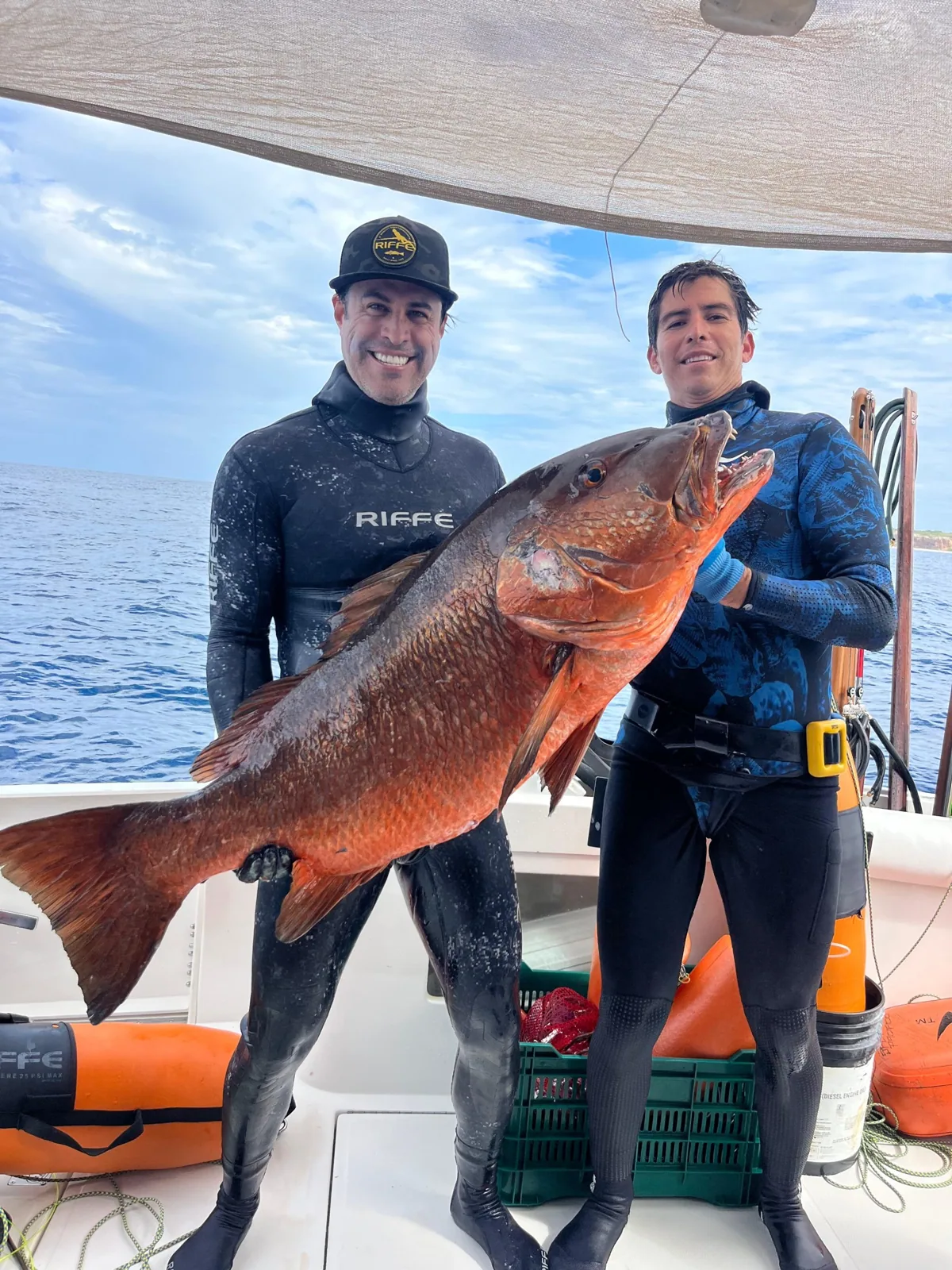
Our own seasonal calendar is the honest reference here — it describes tendencies, not promises. Yellowfin tuna are noted around structure roughly twenty miles out in the July-to-September window, with the prime period for very large fish sixteen to thirty miles out in the last quarter of the year. Wahoo show smaller fish near the offshore pinnacle early in their season, with larger fish arriving as the water cools. Large cubera snapper hold on the structure itself.
Runs shift year to year, and a day that looks perfect on paper can produce nothing. That is genuinely part of it.
The Skills That Matter Offshore
- Comfort with no reference point. Blue water removes the visual cues you use on a reef to judge depth and distance.
- Reading current. A drift is planned around it; fighting it wastes the day.
- Honest self-assessment. Bigger fish tempt longer dives, and longer dives are where trouble starts.
- Fast, calm decision-making. Identify, judge the size, decide — usually in seconds.
- Fish-fighting technique. A big pelagic on a float line is a physical problem, not a trophy photo.
This is why blue water is not a first-day activity. Time on reef, a reliable buddy routine and a settled breath-hold come first.
Equipment Is Heavier, Simpler and Redundant
Offshore setups are built around one assumption: the fish may be much stronger than you.
- Longer, more powerful guns with reliable slip-tip rigging, so a fish is held rather than torn free.
- Pressurised floats — a 30L or 40L float at 30PSI resists compression when a fish pulls it down.
- Bungee float lines rather than reels, so line can run without being attached to you.
- Flashers to bring curious pelagics into range: reflective, vibrating attractors that work with light, sound and movement, some deployable to around twenty metres.
- Chum, camo wetsuit, low-volume mask, weight belt and onboard safety equipment — all included on our trips.
How the Day Unfolds
Early
Meet at the marina
Everyone meets on Av. El Anclote in Punta Mita, where the boat departs. Gear is checked, the plan is explained and the day's conditions are discussed honestly before leaving.
The run
Eighteen miles out
The run offshore takes real time and real sea state. If the forecast doesn't support a safe crossing, the day is moved — that decision belongs to the captain, not the schedule.
On station
Drifts, flashers, waiting
The guide reads current and structure and sets up drifts. Divers work in rotation: one hunting, others resting and watching. Flashers go in. Then comes the patience.
Late
Return and process
Any catch is cleaned and packed properly. Ceviche is made aboard with the first fish, and the eight-hour day usually ends quieter than it started.
Why Guides Matter More Offshore, Not Less
On a reef, a poor decision usually costs you a fish. Offshore, conditions change faster, distances are longer and help is further away. A local guide is reading current, bait activity, sea state and your own condition simultaneously, and the value of that judgement shows most on the days when the answer is "not today".
The measure of a blue-water day isn't the fish. It's whether every decision made out there was the right one.
How far offshore is La Corbeteña?
About eighteen miles from Punta Mita. Our blue water day is an eight-hour open-ocean trip built around that run.
What experience do I need?
Solid freediving comfort and previous spearfishing experience. If you're starting out, reef spearfishing or Spear Level 1 is the right place to begin.
What species might we see?
Yellowfin tuna, wahoo and large cubera snapper are the fish blue-water hunters come for here. Presence varies by season and conditions, and nothing is guaranteed.
What equipment is included?
Camo wetsuit, freediving fins, low-volume mask and snorkel, blue-water spearguns and weight belt, chum, onboard safety equipment, a professional instructor, food and drinks, plus fish cleaning and packing.
What happens if the weather turns?
Offshore days depend on sea state. If conditions don't support a safe crossing the trip is rescheduled — that call is made in your interest.