
· 9 min read · Spearos Pacífico
The marina is still half asleep. Ice goes into the box, rods come off the rack, and the water inside the point looks like poured glass. A few minutes later the boat clears the headland, the swell picks up its rhythm, and the day stops being a plan and starts being whatever the ocean has decided.
Almost every guest asks the same question before they arrive: when is the best time to fish in Punta Mita? It is a fair question, and the honest answer is less tidy than a calendar. Punta Mita sits at the mouth of Bahía de Banderas, where a shallow reef coastline meets very deep Pacific water within a short run. That geography gives us something to fish in every part of the year. What changes is which fishing feels best.
What controls fishing conditions in Punta Mita
Seasons are a rough guide. Conditions are the real story, and they are built from a handful of moving parts.
- Water temperature — warmer water tends to pull pelagic species closer; cooler water often concentrates coastal fish.
- Currents — they move nutrients and bait, and they decide where the productive water sits on any given morning.
- Baitfish — find the bait and you have found the reason for everything else.
- Wind and swell — they set how far we can comfortably run and how the water fishes.
- Visibility — critical for spearfishing, and easily changed by swell, plankton, or runoff.
- Rain and runoff — heavy rain can colour up inshore water for a few days.
- Tropical weather — through the warmer months, larger systems can reshape a week of conditions.
- Moon and tides — they influence feeding windows and how the reef behaves.
This is why an experienced guide reads the present rather than the calendar. We look at what the water has been doing over recent days, where bait has been holding, what the forecast is building toward, and then choose between reef, coastal, and offshore ground.
The ocean decides what every day will become. Our job is to meet it ready.
The seasons, in broad strokes
No two years repeat exactly. These are patterns, not promises.
Cooler, drier months
Comfortable weather, coastal focus
This part of the year usually brings the most comfortable weather: lighter humidity, pleasant mornings, and long stretches of settled sky.
Water can run cooler, which often suits reef and inshore fishing. Snapper, triggerfish, and jacks are among the coastal possibilities, and short runs mean more time actually fishing.
Offshore days remain possible whenever water temperature and bait cooperate. Some seasons they do, some seasons they do not.
Spring transition
Mixed water, mixed opportunity
As the water warms and currents shift, the coast enters a genuine transition. Bait moves, visibility changes week to week, and the fishing can look different from one trip to the next.
It rewards flexibility. On these days we often decide between reef, coastal, and offshore ground based on very recent activity rather than a fixed plan.
Warm-water months
The offshore window opens wider
Warmer water is when the bluewater conversation gets serious. Yellowfin tuna, dorado, wahoo, sailfish, marlin, and other pelagic species become realistic possibilities.
Possibilities, not guarantees. Warm water alone means nothing without current, bait, and productive water within range.
These months also bring humidity, rain, changing swell, and tropical weather. Safety and flexibility come before any target species, always.
Fall transition
Warm water offshore, changing skies
Warm water often lingers offshore while weather patterns start to turn. That combination can make for interesting fishing.
It also demands honest, day-by-day assessment of swell and forecast before committing to a long run.
Best time for reef fishing
The local reef around Punta Mita is the backbone of our short trips, and it fishes across much of the year. Yellowtail snapper, green bar snapper, cubera snapper, triggerfish, and green jacks are among the species guests may encounter, depending on conditions.
You can fish the reef with rod and reel or work it with a speargun. Both reward patience and a good eye. Availability varies, and selecting the right fish matters far more than filling a box.
Best time for offshore tuna fishing
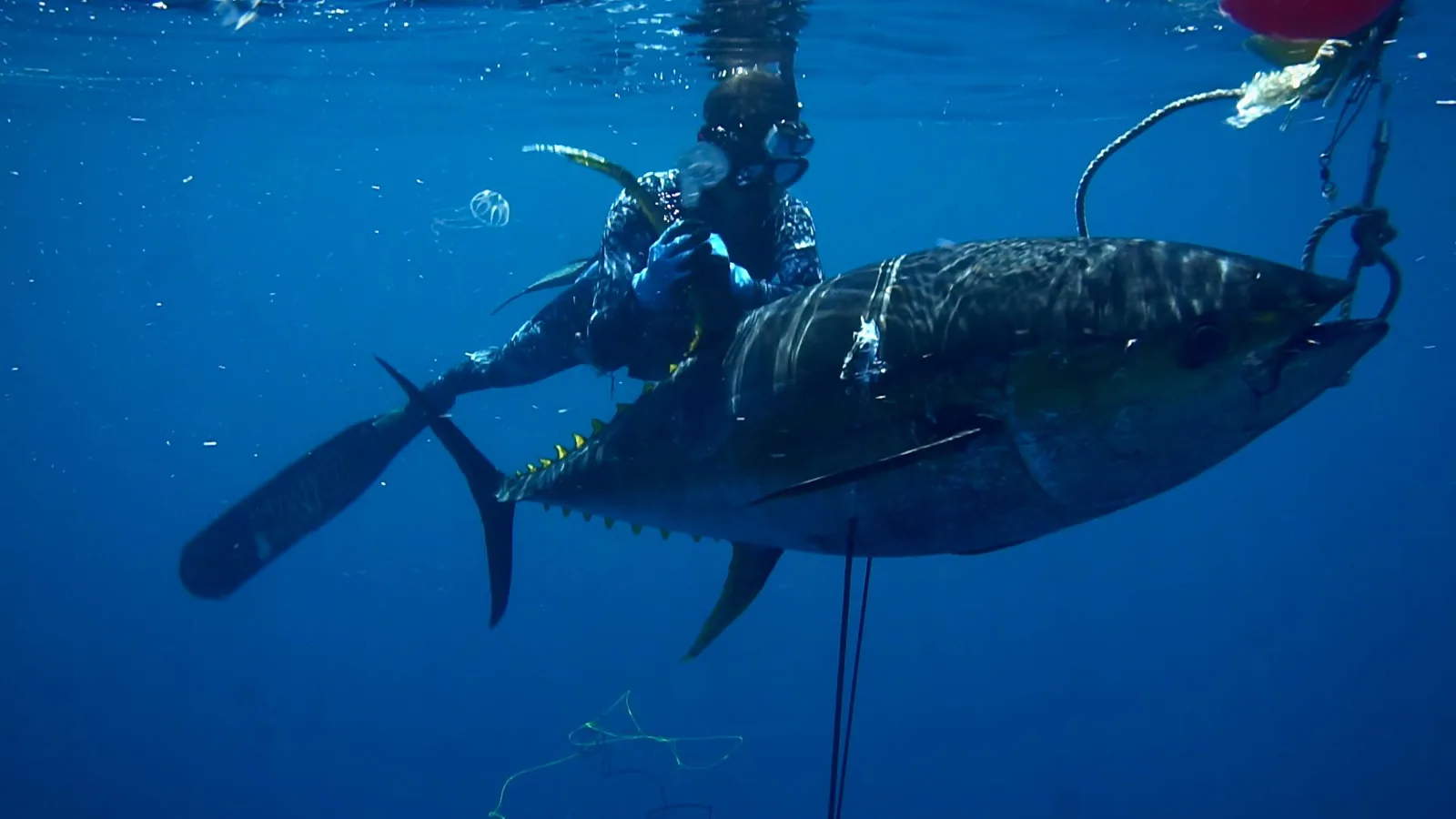
Yellowfin tuna are travellers. They follow temperature, current, and bait rather than a date on a calendar, which is why nobody honest will hand you a guaranteed tuna month.
Offshore, we are reading the ocean constantly: birds working, bait balls, surface activity, current lines, temperature edges, dolphin activity where it is legal and ethical to approach, and the general character of the blue water.
For guests who want the deepest version of that search, the 2.5-day offshore expedition is the most immersive option we run — more hours offshore, pinnacles and deep drop-offs, sunset sessions, and a night out on the water instead of a run home.
Best time for spearfishing
Spearfishing depends on more than whether fish are around. It depends on whether the water lets you hunt well and safely.
- Underwater visibility
- Current strength and direction
- Swell and surface conditions
- Wind
- Water temperature and comfort in the water
- Diver experience and breath-hold ability
- Safe entry and exit
- Confident species identification
- Selective harvest
A clean, calm, clear day outside so-called peak season will almost always beat a churned-up day inside it. If spearfishing is your priority, book with some flexibility in your dates and let the conditions choose the morning.
Best time for Catch & Cook
The Catch & Cook experience is built around a productive local reef, which is why it works during many parts of the year whenever conditions allow.
The morning starts around 8:00 AM. We fish or dive the reef, harvest thoughtfully, and then run to a calm stretch of white sand near The St. Regis Punta Mita Resort. Seats and tables come out, cold drinks come out, and your guide begins preparing the catch — sashimi, ceviche, grilled fish, or whatever the species and the day suit best.
Preparations always depend on what the ocean provided and how it handled. Then there is time to eat, swim, and stay on the beach a while.
Choosing a season based on the experience you want
A local reef trip
- Less travel time
- An active morning
- Reef fishing or spearfishing
- A Catch & Cook experience
An offshore day
- More open-ocean travel
- Pelagic fishing
- Trolling and bluewater techniques
- A longer, less predictable hunt
The 2.5-day expedition
- Maximum time offshore
- Pinnacles and deep drop-offs
- Tuna-ground exploration
- Spearfishing and sport fishing
- Sunset sessions and overnight ocean camping
- Fresh Catch & Cook dinners
If you are new to the water, the reef trips and our guided spearfishing course are the natural starting point. If you already dive, tell us what you want to hunt and we will tell you honestly what the season is likely to offer.
How far in advance should you book?
Earlier is better in a few specific cases: holiday periods, larger groups, multi-day expeditions, and any trip where your travel dates cannot move.
If you are travelling specifically to target one species, message us before you lock in flights. It costs nothing to ask, and we would rather help you choose good dates than explain afterwards why the water was wrong.
Frequently asked questions
Can you fish in Punta Mita year-round?
Yes. There is fishable water in every part of the year. What changes is which style of fishing and which species are realistic, and whether the weather allows a safe run on a given day.
What is the best month for yellowfin tuna?
There is no guaranteed month. Yellowfin follow warm, productive water, current, and bait, so the better periods are defined by real-time offshore conditions rather than a fixed calendar.
When is the best time for Punta Mita spearfishing?
Whenever visibility, current, and swell line up. Clean water and safe conditions matter more than the season, so flexible dates give you the best chance of a genuinely good dive.
Is reef fishing available throughout the year?
The local reef fishes across much of the year. Species availability varies with season and conditions, and the plan is always adjusted to what the water is doing.
Is the rainy season a bad time to fish?
Not inherently. Warmer months can produce excellent offshore fishing. They can also bring humidity, rain, and changing swell, so trips are planned day by day around safety.
Can beginners book a fishing or spearfishing trip?
Yes. Our reef trips suit first-timers, and the guided spearfishing course is designed for people entering the sport with no prior experience.
Are catches guaranteed?
No. We fish real ocean, not a stocked pond. Species, methods, and results vary with season, conditions, and fish activity, and catch is never guaranteed.
What happens if the weather is unsafe?
We do not run unsafe trips. If conditions are dangerous, we work with you to reschedule or adjust the plan.
Can sport fishing and spearfishing be combined?
Often, yes. Many guests fish with rod and reel and also get in the water on the same trip, and the multi-day expedition is built around combining both.
Which trip is best for a Catch & Cook experience?
The beachside Catch & Cook trip. It pairs a local reef morning with a fresh meal prepared on the sand, and it is the most complete reef-to-table version of the day.
If you already know what you want to hunt, or you simply want the best day the ocean is likely to give you, tell us your dates and we will be straight with you about what to expect.